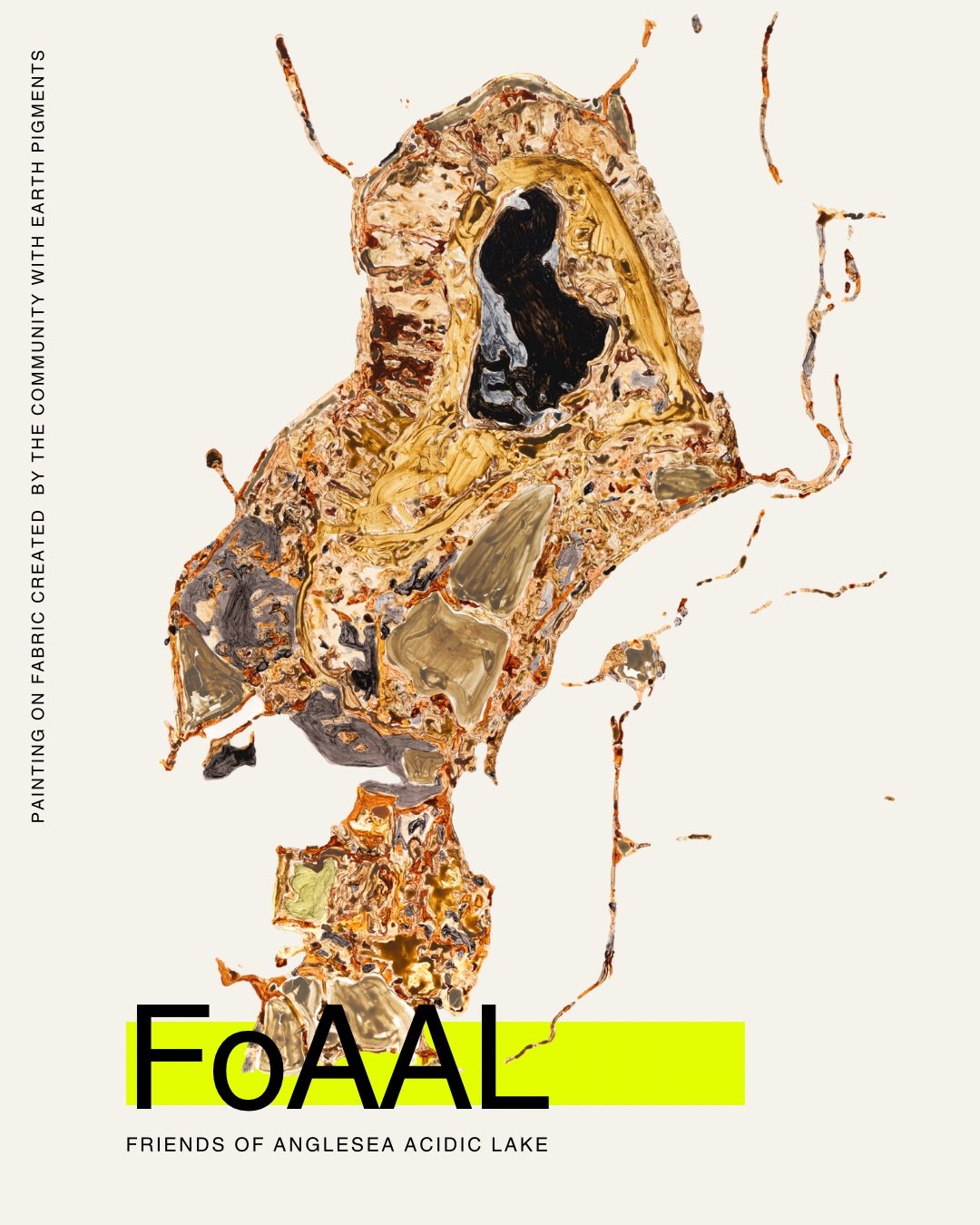
ABOUT THE COLLECTIVE
FoAAL is a creative collective formed in Anglesea, Victoria, to advocate for the former Alcoa mine site and its entangled ecological relations — the unnamed acidic lake, the diverted Salt Creek, the Anglesea River, the heathlands, and the more-than-human community that depends on them.
Founded by artist pattie beerens, FoAAL organises rhizomally: non-hierarchical, lateral, responsive — gathering people around environmental crisis with a spirit that is serious and playful in equal measure. CARE — extended to species, earths, waterways and deep time — is the collective’s animating practice.
FoAAL SUBMISSION opposing the further pumping of groundwater
A COMMUNITY VOICE: SPEAKING FOR OUR SHARED WATERS AND FUTURES
(Acknowledgement of Wadawurrung Country)
Good morning everyone. I’m here today as part of a community that has spent quiet time walking around this site, sitting with it, learning from it, and asking ourselves: how do we care for a place that has already given so much?
What we’re considering today isn’t just a technical application - it’s a question about time, care, and our responsibility to future generations. We’re talking about a water body that will exist for hundreds of years, shaped by decisions we make in the next few months.
This site carries stories that are precious - fossil evidence shows us it was once a thriving rainforest, part of an ancient meandering river system. Now it sits within a network of precious habitats: our beloved Anglesea River, coastal heathlands, and remnant vegetation. Every drop of groundwater connects these systems together.
When I look at this acidic lake, I see a new ecosystem in formation. Given patience and minimal interference, even acidic environments can develop unique ecological communities. But that requires us to think beyond corporate timelines and embrace geological time.
The question Section 40 asks us is profound: whose timeframe are we using? Corporate reporting cycles that measure success in quarters, or the centuries this landscape will exist?
Alcoa’s own words remind us to be patient. In 2018, they acknowledged it would take ten years just to understand the water quality. Yet here they are, asking to make irreversible decisions before we have the knowledge we need.
Here’s what has become clear since Alcoa’s original rehabilitation plan was written: the acidic effects on surrounding environments, including the river system, weren’t fully understood. The long-term effects on our precious heathland species over the next 100 to 200 years remain unknown.
Alcoa’s current plan is silent on these crucial matters because this knowledge simply didn’t exist when it was written. Shouldn’t we pause and ask: given what we now know, what does genuine rehabilitation look like?
In our climate-challenged world, every drop of groundwater is precious. It should be preserved for legitimate community and environmental needs, not extracted for corporate convenience.
Alcoa’s primary justification appears to be speeding up their handover timeline. In their plan they assumed ten years of natural filling. What has changed, other than impatience?
Through our community art projects - our circumnavigations, our discovery walks, our collaborative paintings with earth pigments - we’ve developed a different relationship with this site. One based on connection, patience, and care.
We’ve learned that caring is a better ethos for rehabilitation of delicate environmental systems. We’ve discovered that this place deserves to be approached with the same reverence we’d give to any healing process - slowly, attentively, with respect for what we don’t yet understand.
We ask that Southern Rural Water refuse this application, not out of opposition to progress, but out of care for the interconnected ecology of Anglesea and for genuine healing.
We ask that Alcoa be required to revisit its rehabilitation plan with the knowledge we now have. They shouldn’t be able to bypass proper planning by extracting more from the this place.
When outcomes are uncertain - and Alcoa admits they are - the precautionary principle should guide us. The cautious approach serves not just our generation, but the generations of both human and non-human communities who will inherit the consequences of today’s decisions.
We support patient, caring rehabilitation over hasty extraction. It’s about honoring the intergenerational responsibility we carry.
Alcoa has not demonstrated that groundwater extraction serves any purpose beyond corporate convenience, while the environmental risks are significant and the precedent concerning.
Our community has shown there’s another way - one that approaches this wounded landscape with the care it deserves, the time it needs, and the respect owed to all the beings who will call this place home long after corporate timelines are forgotten.
We urge you to choose the path of patience, care, and genuine environmental stewardship.
Thank you.